


Holmium/Thulium Laser Enucleation of the Prostate (HoLEP/ThuFLEP) in Israel with a World-Class Expert
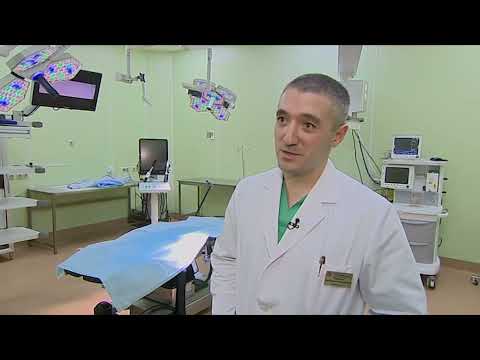


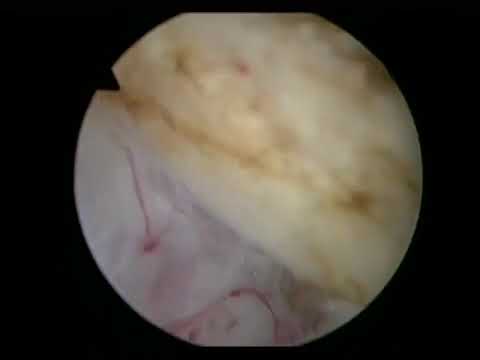


If you are reading this, you or someone close to you has likely been diagnosed with benign prostatic enlargement (benign prostatic hyperplasia, BPH). You may already have heard about TURP, GreenLight laser, HoLEP, ThuFLEP, Rezūm, Aquablation, and other treatment options. Modern urology offers multiple approaches for BPH, and choosing among them can be challenging.
Below, we review and compare the main methods used to treat BPH, with a focus on the technique recommended by leading international urological associations: laser enucleation with a holmium or thulium fiber laser — HoLEP or ThuFLEP.
HoLEP vs ThuFLEP: what is the difference?
HoLEP and ThuFLEP differ only in the type of laser used. Clinical outcomes are comparable. In both procedures, the surgeon removes only the overgrown adenomatous tissue while preserving the prostate capsule and surrounding structures. Importantly, adenomas of any size can be treated. The operation is performed endoscopically through the natural urinary passage without external incisions.
Using the laser, the surgeon precisely separates the enlarged prostate tissue from the healthy part along the natural anatomical plane. The tissue is then removed with a dedicated instrument. This technique minimizes trauma and supports a faster recovery.
In most cases, the patient is discharged the next day and returns to the usual rhythm of life within about a week. Erectile function and urinary control are typically preserved.
Removes adenoma of any size — no incisions
Preserves erectile function and urinary control
Organ is preserved; only overgrown tissue is removed
Have a question?
If you’re experiencing lower back pain, frequent or difficult urination, discomfort, burning, or blood in your urine — it’s best not to wait. Send us your question now, and Professor Enikeev will recommend the next steps
Professor Dmitry Enikeev: One of the World’s Leading Experts in Laser Enucleation (3,500+ Procedures)
When choosing a surgeon, trust in the specialist is essential — together with experience, qualifications, and a responsible approach to care. Dmitry Enikeev has performed more than 3,500 HoLEP and ThuFLEP procedures, far exceeding the caseload of most urologists (typically a few hundred). This extensive experience allows him to treat complex cases where additional expertise is required.
He operates on very large (“giant”) adenomas, commonly 200–300 cm³, and even up to 600 cm³ — roughly 25–30 times the typical prostate volume. Among his patients was the largest adenoma ever removed in Israel, an experience shared by only a small number of surgeons worldwide.
Expertise is built not only in the operating room. For many years, Professor Enikeev has served as a consultant (advisory board) to Olympus, the world’s leading manufacturer of endoscopic and laser equipment for urology. As an expert, he contributed to the development of thulium fiber laser systems used in leading clinics worldwide. This involvement provides deep insight into the technology’s capabilities and limitations.
Professor Dmitry Enikeev is regularly invited to international congresses, where he performs live surgeries for audiences of expert urologists from dozens of countries. He has published more than 300 scientific papers in leading journals focused on improving outcomes and enhancing safety.
He pays close attention to details that may seem minor but can significantly influence treatment quality. He also understands that patients value not only technical excellence, but a process that feels calm, clear, and predictable — from preparation through recovery.

Author of 300+ peer-reviewed publications on safety and outcomes
Laser Enucleation for Very Large Adenomas (200–300 cm³ and Beyond): Why Size Is No Longer a Limitation
Many patients become anxious when an ultrasound shows that the prostate is several times larger than normal. They often assume that surgery will be riskier and recovery longer.
A key advantage of laser enucleation is that it enables removal of adenomas of any size endoscopically, without incisions. The surgeon separates the enlarged tissue from the capsule along the natural plane and then removes it with a special instrument. Larger adenomas can make the procedure longer, but this does not reduce safety and does not prolong recovery.
A patient with a 200–300 cm³ adenoma is usually discharged just as quickly as a patient with a 50 cm³ adenoma — typically the day after surgery.
Not all techniques share this advantage. TURP, GreenLight laser, and Rezūm have size limitations; for large prostates these methods can be technically more difficult and outcomes may be less reliable. Laser enucleation remains consistently effective regardless of prostate size.
This addresses one of the most common fears — but another important question remains: is surgery always necessary?
Even at 200–300 cm³, recovery is typically fast
Safety is not dependent on prostate size
Due to precision and safety, HoLEP has become the preferred BPH procedure
Professor Dmitry Enikeev Answers Common Questions
Will the procedure affect potency or erections?
Laser enucleation does not damage the nerves responsible for erections. These nerves run outside the prostate capsule, while the surgeon works within the capsule. Erectile function is typically preserved. Some men even report improvement after surgery as pelvic blood flow normalizes and vascular compression decreases.
Will I have urinary incontinence?
During laser enucleation, the urinary sphincter is preserved. In the first weeks, mild discomfort or irritation during urination can occur — a normal healing response. Urinary control usually improves naturally over 3–6 months and rarely requires additional treatment.
Will I need repeat surgery later?
In most cases, no. Laser enucleation removes the adenomatous tissue responsible for future growth. As a result, it is typically a one-time definitive solution, especially important for patients who wish to avoid recurrence years later.
When Surgery Is Needed for BPH
Not every enlarged prostate requires immediate surgery. If symptoms are mild and do not interfere with everyday life, a physician may recommend watchful waiting with follow-up every 6–12 months.
Medications are often preferred in early stages. For moderate symptoms, doctors may prescribe drugs that relax prostate and bladder neck muscles (alpha-blockers) or reduce prostate size (5-alpha-reductase inhibitors). These can improve symptoms and delay the need for surgery.
Surgery becomes appropriate when symptoms significantly affect quality of life — for example, frequent nocturia, weak urinary stream, or a persistent sensation of incomplete bladder emptying that interferes with sleep, work, and daily activities.
There are also situations where surgery is medically indicated regardless of symptom severity, including:
- Acute urinary retention (inability to urinate without a catheter)
- Recurrent urinary tract infections
- Bladder stones
- Visible blood in the urine attributable to BPH
- Deterioration of kidney function due to obstructed urinary outflow
In these cases, delaying treatment can be unsafe. If medications stop working or require repeated dose escalation, this suggests conservative therapy is no longer sufficient. The longer the bladder is forced to work against obstruction, the harder it can be to restore normal bladder function.
Weak or incomplete urination
Recurrent infections or urinary retention
Stones, hematuria, or kidney impairment
Medications no longer provide meaningful benefit
How Laser Enucleation Differs from TURP, GreenLight, Rezūm, and Aquablation
All these methods aim to remove obstructing prostate tissue and improve urination — but they do so differently, which affects outcomes.
In laser enucleation, the surgeon removes the adenoma from within the capsule and extracts it, while the capsule and healthy tissue remain in place. A portion of the removed tissue is sent for pathology, which is an important additional safeguard that can detect unsuspected cancer.
GreenLight, Rezūm, and Aquablation primarily ablate or destroy tissue rather than removing it intact. GreenLight vaporizes tissue with heat; Rezūm uses water vapor; Aquablation uses a robot-guided water jet under ultrasound guidance. After vaporization/thermal destruction, there may be no tissue available for microscopic evaluation, which can limit the ability to identify atypical or malignant changes.
With TURP, the surgeon removes tissue in small fragments. Because specialized irrigation fluids may be used, absorption into the bloodstream can, in rare cases, lead to TUR syndrome (nausea, confusion, low blood pressure), which can be serious. With HoLEP/ThuFLEP, this risk is essentially eliminated: the laser seals vessels as it works, and standard saline irrigation is used, which is safer even if absorbed. This is particularly relevant for older patients and those with cardiovascular disease.
TURP, GreenLight, Rezūm, and Aquablation also have prostate size limitations. In very large glands, complete removal can be difficult, and residual tissue may regrow over time — meaning symptoms can recur years later.
Open surgery is now reserved for exceptional cases (e.g., major bladder pathology, significant scarring after failed prior procedures, or other reasons preventing an endoscopic approach).
Because it can treat any prostate size without incisions and with a favorable safety profile, HoLEP/ThuFLEP is the preferred choice for most patients.
Tissue can be sent for histology to rule out cancer — not possible after GreenLight vaporization
The laser seals vessels, minimizing bleeding and eliminating TUR syndrome risk
TURP/GreenLight are suitable mainly for smaller glands; enucleation works for any size
Catheter is typically 24 hours vs 3–5 days after TURP
Comparison of BPH Surgical Options
Parameter
|
HoLEP/ThuFLEP
|
TURP
|
GreenLight
|
Rezūm
|
Aquablation
|
|---|---|---|---|---|---|
Extent of tissue removal
|
85-90% ✅
|
60-70% |
50-60% |
40-50% |
70-80% ✅
|
Re-treatment risk | < 1% ✅
|
10-15% ❌
|
15-20% ❌
|
20-25% ❌
|
5-10% |
Maximum prostate size |
No limitation ✅
|
Up to 80-100 cm³
|
Up to 120 cm³
|
Up to 80 cm³ ❌
|
Up to 80-100 cm³
|
TUR syndrome risk
|
Eliminated ✅
|
2-5% ❌
|
Eliminated ✅
|
Eliminated ✅
|
Eliminated ✅
|
Hospital stay |
1 day ✅
|
3-5 days
|
1-2 days ✅
| Outpatient/ 1 day ✅ |
1-2 days ✅
|
Catheter time
|
1 day ✅
|
3-5 days
|
1-2 days ✅
|
3–7 days
|
1-2 days ✅
|
Return to work
|
5-7 days ✅
|
2-3 weeks
|
1-2 weeks ✅
|
3-5 days ✅
|
1-2 weeks ✅
|
Histology available |
Yes ✅
|
Yes ✅
|
No ❌
|
No ❌
|
No ❌
|
How Laser Enucleation Is Performed
The procedure is carried out under general anesthesia or spinal anesthesia. With spinal anesthesia, the patient remains awake but does not feel the lower body. This option places less stress on the heart and lungs than general anesthesia and can be beneficial for patients with cardiac or respiratory comorbidities.
A thin endoscope with a laser fiber is introduced through the urethra. The surgical field is displayed on a large monitor with high magnification, enabling precise work.
Professor Enikeev uses the SOLTIVE Premium SuperPulsed system — a next-generation premium thulium fiber laser (wavelength 1940 nm) with a tissue penetration depth of approximately 0.15 mm, enabling high precision while minimizing collateral injury. The process is similar to peeling a mandarin: there is a natural thin layer that allows gentle separation.
The procedure consists of several steps:
- Creating grooves: precise incisions separate the adenoma from the capsule along the boundary plane.
- Enucleation of lobes: the adenoma is dissected in large fragments and pushed into the bladder.
- Morcellation: fragments are mechanically morcellated and removed endoscopically.
All removed tissue is sent for pathological examination.
The operation typically takes 60–120 minutes, depending on prostate volume. A catheter is placed for 24 hours for drainage and bladder irrigation. By comparison, catheterization after TURP often lasts around 3 days, which can extend hospitalization.

Often under spinal anesthesia — less burden on heart and lungs
Common Misconceptions About HoLEP/ThuFLEP
“The laser burns the prostate”
In HoLEP/ThuFLEP, the laser is not used to “burn” the prostate. It functions as a highly precise surgical instrument that separates tissue along the natural anatomical plane. This differs from GreenLight, where tissue is vaporized by heat and therefore cannot be examined microscopically.
“This is new and unproven”
HoLEP has been used worldwide for more than 30 years. Millions of procedures have been performed, and outcomes are well-documented in major journals. The method is included in international clinical guidelines.
“Laser surgery leaves scars inside the prostate”
Scarring can occur after some laser techniques, especially those based on layer-by-layer ablation. HoLEP/ThuFLEP removes the adenoma en bloc, leaving a smooth capsule surface that typically heals without significant scarring.
“The entire prostate must be removed”
This confuses BPH surgery with prostate cancer surgery. In BPH, only the benign adenomatous tissue is removed; the prostate capsule remains. Therefore, erectile function and urinary control are typically preserved. Radical prostatectomy is performed for cancer and is a different operation with different consequences.
Recovery After Laser Enucleation
The first day is spent in the hospital under nursing observation. With the catheter in place, discomfort is usually minimal. The next morning, the catheter is removed and the patient urinates independently. The first urination may cause burning, which is a normal and temporary healing response. Discharge typically occurs the next day.
During the first week at home:
- Drink plenty of water (at least 2 liters/day) to help flush the bladder.
- Avoid lifting more than 5 kg.
- Take prescribed medications to prevent infection and support healing.
- Return to desk work is often possible in 5–7 days; physically demanding work may require about 3 weeks.
Weeks 2–3 are the active recovery phase. Intermittent small amounts of blood in urine may occur and usually resolve spontaneously. Gradually return to normal activity, avoiding only heavy exertion. Many patients already notice a significant improvement in urinary flow compared to the preoperative state.
Complete healing typically takes about one month. After that, restrictions are lifted, including resuming sexual activity and sports. A follow-up visit is usually scheduled at one month.
Discharge the next day
Return to normal routine in 5–7 days
TURP/GreenLight are suitable mainly for smaller glands; enucleation works for any size
Consultation with Professor Dmitry Enikeev: In-Person in Israel or Online Worldwide
Professor Enikeev sees patients in Tel Aviv and Ashkelon. Consultations are available in Hebrew, English, and Russian. Appointments can be arranged through Clalit Mushlam, Ayalon insurance, or privately.
For patients living elsewhere in Israel or abroad, an online consultation is available. This can be useful for expert opinion without immediate travel, to review test results, assess candidacy for laser enucleation, and discuss individual limitations based on overall health.
Many patients seek a second opinion — for example, when prostate size is large and there is uncertainty about the best method, or when it is unclear whether surgery is truly necessary. A video consultation allows an independent expert assessment.
To book an appointment, you may complete the website form or contact the clinic by phone. Helpful baseline tests include PSA, prostate ultrasound with volume, and uroflowmetry, but if some are missing, this is not a barrier — the consultation will clarify what is needed and when travel makes sense.
In-person in Tel Aviv and Ashkelon (Hebrew/Russian/English)
Online consultations available worldwide
Booking via website form or phone
Book an Appointment with Urologist Prof. Dmitry Enikeev
In person consultations in Tel Aviv and Ashkelon, online consultations worldwide.
Appointments are available:
- privately
- through Ayalon insurance
- through Clalit Mushlam
The doctor’s assistant will help you choose a convenient appointment time and answer your questions.
Weekdays from 9:00 AM to 6:00 PM
In person consultation
- Tel Aviv
Raphael Hospital, Atidim Park, Building 3, 1st floor.
Please confirm the office number with the secretary.
Parking is available in Building 6.
Public transportation: bus terminal at the entrance to Atidim Park, routes 6, 7, 8, 12, 22, 42, 52, 54, 75, 76, 189, 220, 259, 266.
- Ashkelon
TB Clinic, Arie Tagar 41, 2nd floor.
Please confirm the office number with the clinic secretary.
Municipal parking available. - Online consultation
Conducted via Zoom.
Practical Questions About HoLEP/ThuFLEP and Recovery
Discharge is typically the day after surgery. The catheter is removed in the morning; after successful voiding, the patient can go home. TURP usually requires 3–5 days in hospital.