


Professor Dmitry Enikeev
Treatment of BPH, Prostate and Bladder Cancer, and Kidney Stones in Israel
- Professor, Tel Aviv University
- Professor, Medical University of Vienna
- Lecturer, European School of Urology

Have a question?
If you’re experiencing lower back pain, frequent or difficult urination, discomfort, burning, or blood in your urine — it’s best not to wait. Send us your question now, and Professor Enikeev will recommend the next steps.
For precise decisions and reliable results
Advanced treatment of bladder tumors, prostate enlargement, and prostate cancer by a world-class expert

Provides care even in the most complex urological cases
Professor Enikeev is one of the most experienced urologists in the world, with over 3,500 surgeries performed. His treatment techniques for prostate cancer, benign prostatic hyperplasia (BPH), and bladder tumors are recognized by leading urological associations worldwide.
Extensive experience in the removal of large and giant tumors
Performs surgeries to remove complex tumors and masses. His clinical experience includes successful removal of prostate adenomas exceeding 600 cubic centimeters—25 to 30 times the normal size—as well as bladder tumors larger than 8 cm. This level of expertise enables him to carry out highly complex procedures safely while preserving a high quality of life for his patients.
Pioneered new diagnostic and treatment methods in Israel
He was the first in Israel to adopt cutting-edge international protocols for the accurate diagnosis of prostate cancer and the safe removal of bladder tumors. For prostate cancer detection, he uses fusion biopsy following the Ginsburg protocol under local anesthesia. For bladder tumor treatment, he performs laser en bloc resection, which allows for the complete and minimally traumatic removal of the tumor. These advanced techniques reduce the risk of recurrence, increase diagnostic accuracy, and promote faster recovery.
Diagnosis and treatment
We will choose the gentlest and most effective treatment to help you or your loved one recover faster and maintain a high quality of life
HoLEP/ ThuFLEP
Laser Treatment of Benign Prostatic Hyperplasia - BPH
The gold standard for treating BPH, especially in patients with large and very large prostates. The enlarged prostate tissue is separated using a laser and removed through the urethra, without any incisions. The procedure quickly restores a good urinary flow, with results that usually last for many years.
Discharge: usually the next day
Aquablation
Treatment of BPH Using a High Pressure Water Jet
Aquablation offers a high chance of preserving ejaculation, meaning that semen continues to come out normally during orgasm. During the procedure, enlarged prostate tissue is removed through the urethra using a precisely directed high pressure water jet. The treatment is controlled by a robotic system for greater accuracy. Aquablation can also be used in patients with significantly enlarged prostates.
Discharge: usually on the same day
Rezum
Treatment of BPH Using Water Vapor
A minimally invasive option that can also be suitable for older patients and those with other medical conditions. An instrument is passed through the urethra to the prostate, where a small needle delivers steam into the enlarged tissue. Over time, the treated tissue shrinks. The procedure usually does not require general anesthesia and helps preserve ejaculation. Urination gradually improves over the following weeks.
Discharge: usually on the same day
Fusion Biopsy
Prostate Cancer Diagnosis Using the Ginsburg Protocol
Fusion biopsy allows precise sampling of areas in the prostate that appear suspicious on MRI. Tissue samples are taken both from these targeted areas and systematically from other parts of the prostate according to a defined protocol, reducing the risk of missing clinically significant cancer. The biopsy is performed through the perineum under local or general anesthesia.
Results: usually within 14 days
NanoKnife Focal
Prostate Cancer Treatment Using Electrical Pulses
This treatment may be suitable when the tumor is limited to a specific area of the prostate and preserving sexual function is particularly important. Thin electrodes are positioned around the tumor and deliver short electrical pulses that destroy cancer cells. This approach helps minimize damage to the nerves responsible for erections and may reduce the risk of erectile dysfunction.
Discharge: usually on the same day
Laser en bloc
Laser Removal of Bladder Tumors in One Piece
The tumor is separated from the bladder wall using a laser and removed intact through the urethra, without any incisions. Unlike conventional removal in multiple fragments, the tumor and the underlying tissue remain intact. This allows the pathologist to assess the depth of tumor invasion more accurately and helps determine the most appropriate further treatment.
Discharge: usually the next day
Cryoablation Focal
Prostate Cancer Treatment by Freezing
One of the less invasive treatment options when reducing the overall impact of treatment is important, for example in older patients or those with other medical conditions. Thin probes are inserted into the prostate, and the area containing the tumor undergoes repeated cycles of freezing and thawing to destroy cancer cells. Cryoablation can also be used in selected cases of prostate cancer recurrence after radiation therapy.
Discharge: usually the next day
Photodynamic Cystoscopy
Detection of Bladder Tumors That May Be Difficult to See
Photodynamic cystoscopy helps identify tumor areas that may be difficult to detect with standard white-light cystoscopy. It is usually performed during bladder tumor removal. Before the procedure, a special agent is introduced into the bladder, causing abnormal tissue to become more visible under a specific type of light. This helps define the tumor margins more accurately and allows affected tissue to be removed during the same procedure.
RIRS
Laser Removal of Kidney Stones
Kidney stones are treated through the natural urinary tract, without an incision or puncture of the kidney. A thin flexible endoscope is passed through the urinary tract to the stone, which is fragmented with a laser, and the resulting fragments are removed. This approach reduces surgical trauma and the risk of bleeding. RIRS is most commonly used for kidney stones up to 2 cm in size.
Discharge: usually on the same day or the next day
Cystolithotripsy
Laser Removal of Bladder Stones
Bladder stones are fragmented with a laser and removed through the urethra, without an incision in the bladder. If the stones have developed because of urinary obstruction caused by BPH, cystolithotripsy can be performed together with HoLEP or ThuFLEP. This allows both the stones and the underlying cause of their formation to be treated during a single operation.
Discharge: usually the next day
Laser BNR
Laser Treatment of Bladder Neck Narrowing
Scar tissue can develop at the bladder neck after chronic inflammation or previous surgery inthis area. This can narrow the outlet of the bladder, weaken the urinary stream, and make urination difficult. During the procedure, the surgeon passes an instrument through the urethra and uses a laser to incise or remove the scar tissue. This widens the bladder neck and restores a better urinary flow.
Discharge: usually on the same day
Symptoms
When to see a urologist without delay
Difficulty urinating
A common issue in men, especially after the age of 45. It may be caused by prostate enlargement (BPH), urethral stricture, or prostate cancer. If your urine stream has become weak, you feel like your bladder doesn’t fully empty, or you have to strain to urinate — it’s important to see a urologist for diagnosis and treatment.
Pain or burning during urination
These symptoms are often linked to cystitis, urethritis, prostatitis, or urinary tract infections. It’s especially important to see a urologist without delay if the pain gets worse, if there is any discharge, or if you feel generally unwell. Treatment is prescribed after the diagnosis is confirmed—based on lab tests and ultrasound findings.
Frequent urination
If you’re urinating more often than usual, especially at night, it may be a sign of inflammation, prostate enlargement (BPH), prostatitis, or even diabetes. A urologist can help rule out urinary or reproductive system conditions and recommend further tests if needed.
Blood in the urine
Even a single episode of blood in the urine is a serious reason to see a doctor. It may be a sign of kidney stones, bladder tumor, inflammation, or injury. Hematuria requires prompt evaluation by a urologist to rule out any malignant conditions.
Lower back pain
If the pain is sudden and sharp, it may be a sign of kidney colic caused by stones. Persistent or dull pain may be related to pyelonephritis, hydronephrosis, tumors, or chronic kidney disease. A urologist consultation, kidney ultrasound, and lab tests can help determine the cause.
Book an Appointment with Urologist Prof. Dmitry Enikeev
In person consultations in Tel Aviv and Ashkelon, online consultations worldwide.
Appointments are available:
- privately
- through Ayalon insurance
- through Clalit Mushlam
The doctor’s assistant will help you choose a convenient appointment time and answer your questions.
Weekdays from 9:00 AM to 6:00 PM
In person consultation
- Tel Aviv
Raphael Hospital, Atidim Park, Building 3, 1st floor.
Please confirm the office number with the secretary.
Parking is available in Building 6.
Public transportation: bus terminal at the entrance to Atidim Park, routes 6, 7, 8, 12, 22, 42, 52, 54, 75, 76, 189, 220, 259, 266.
- Ashkelon
TB Clinic, Arie Tagar 41, 2nd floor.
Please confirm the office number with the clinic secretary.
Municipal parking available. - Online consultation
Conducted via Zoom.
Academic background
provides a clear understanding of the causes and progression of urological diseases
Professor Enikeev selects the most effective treatment option to ensure a fast recovery and preserve quality of life—even in the most complex cases.
30
citation index
280
research publications
22
clinical studies
70
presentations

Invited to join the Endourology Section of the European Association of Urology and the working group on prostate disease management.

The en bloc bladder cancer removal procedure was recognized as the best presentation at the American Urological Association Congress.
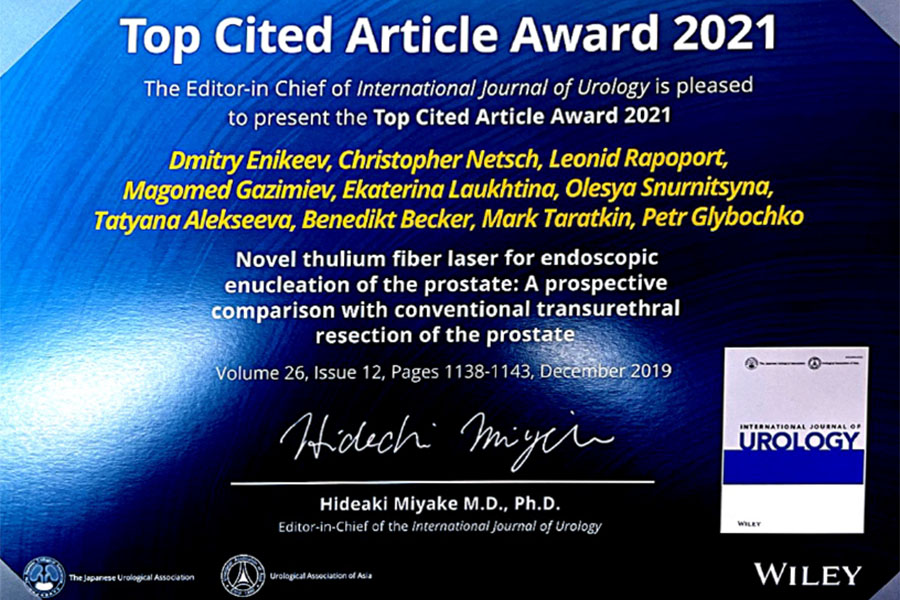
The Journal of the Japanese Urological Association recognized Dmitry Enikeev’s article on laser enucleation of prostate adenoma as the most cited publication of the year.
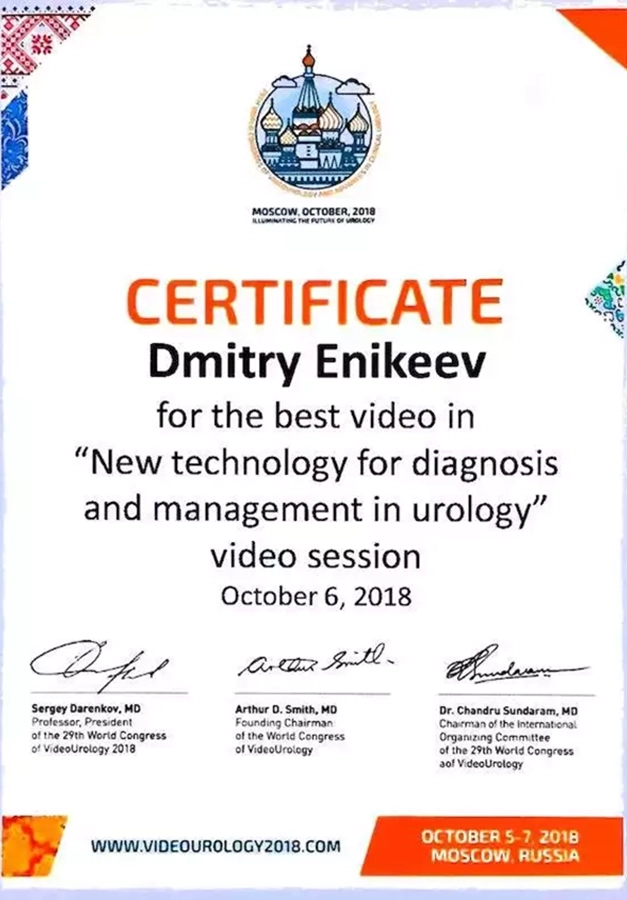
Awarded a certificate for Best Video on New Diagnostic and Treatment Technologies in Urology at the World VideoUrology Congress.
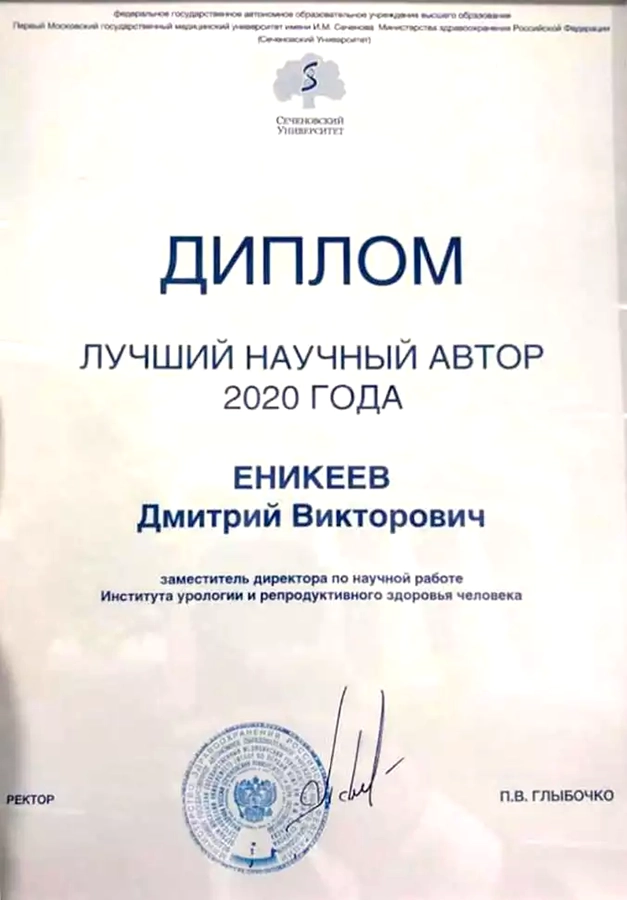
Best researcher, Sechenov University, 2020
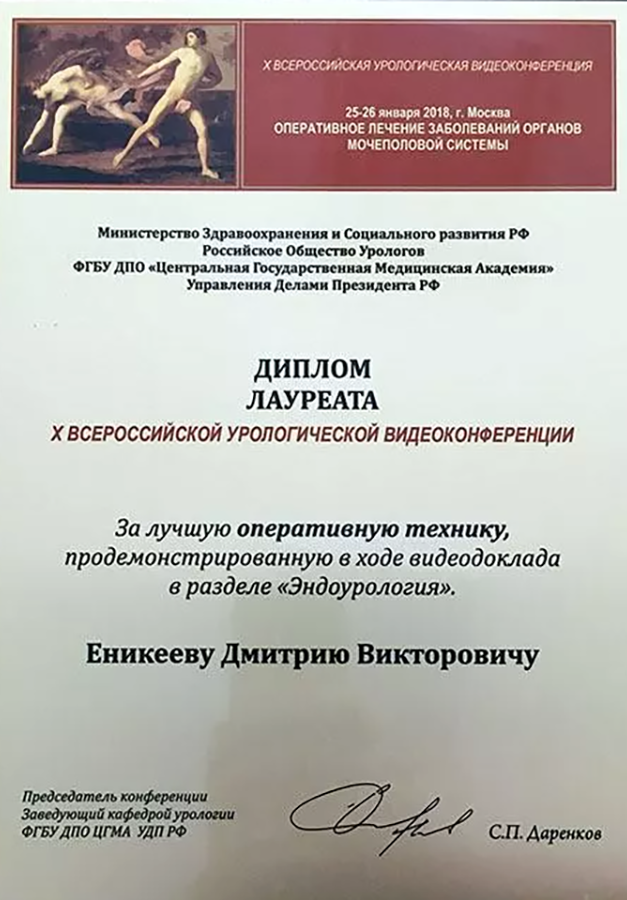
Best surgical technique in endourology, X Russian National Urology Videoconference Section of Endourology, 2018
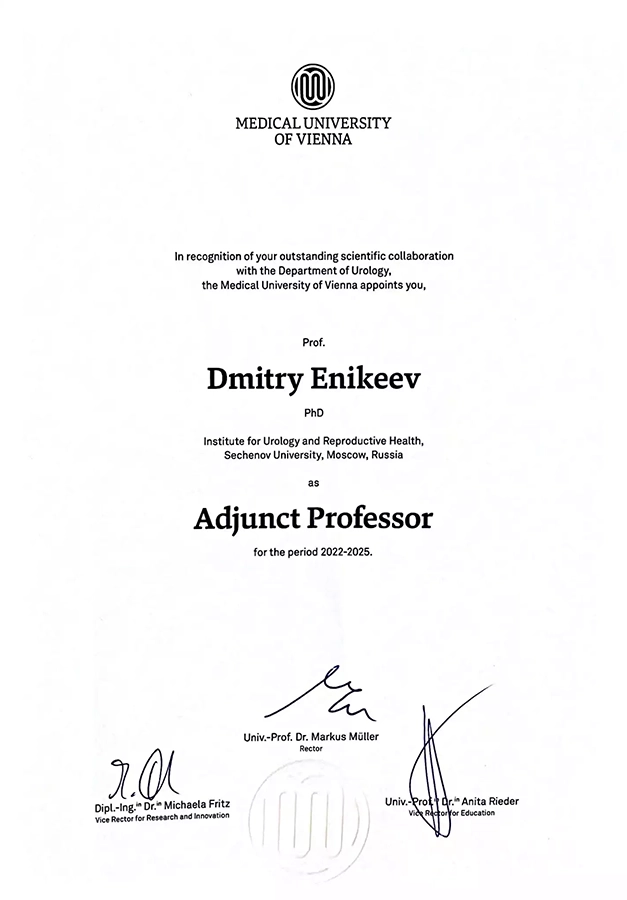
Adjunct-professor, Medical University of Vienna,
2022-2025
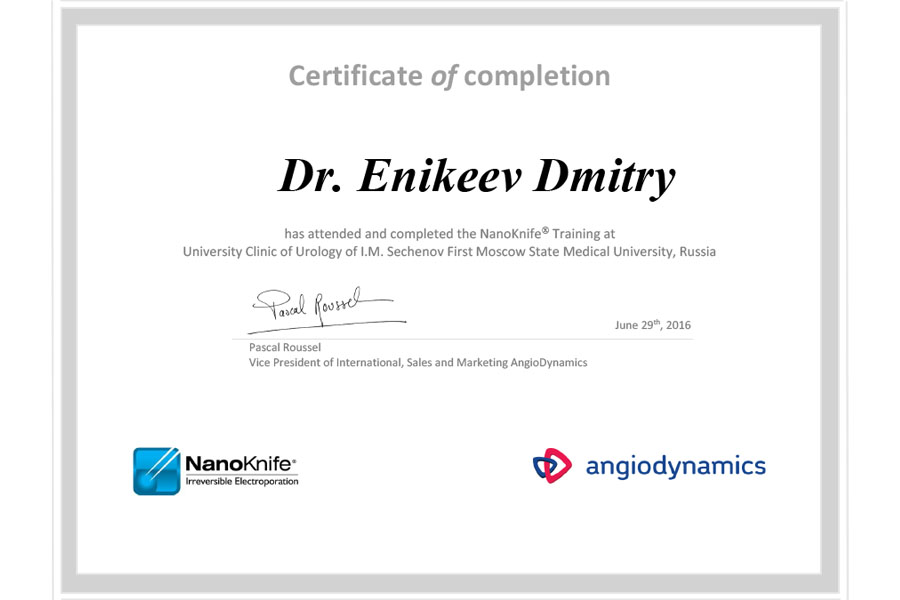
Certifikate of completion the NanoKnife Training, 2016
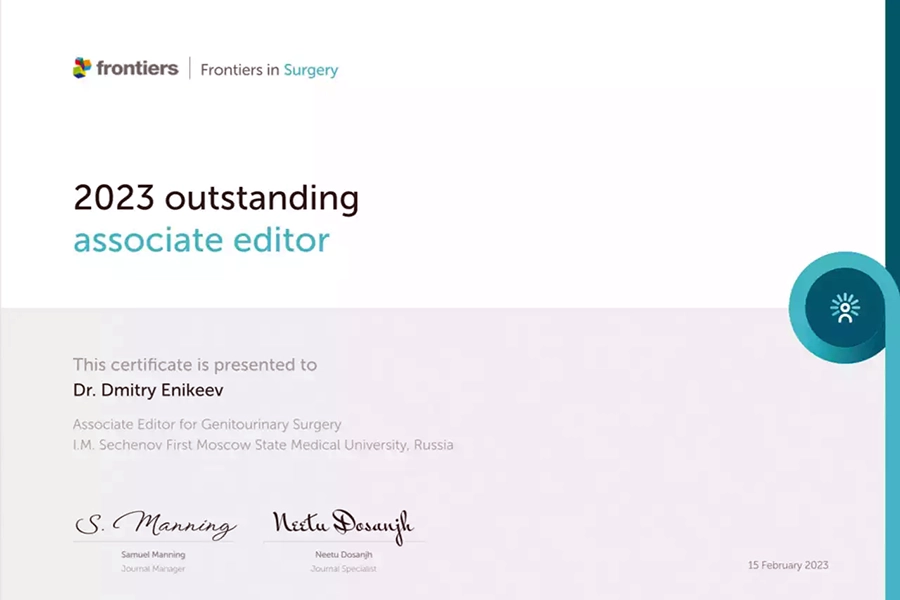
Outstanding associate editor, Frontiers in Surgery, 2023
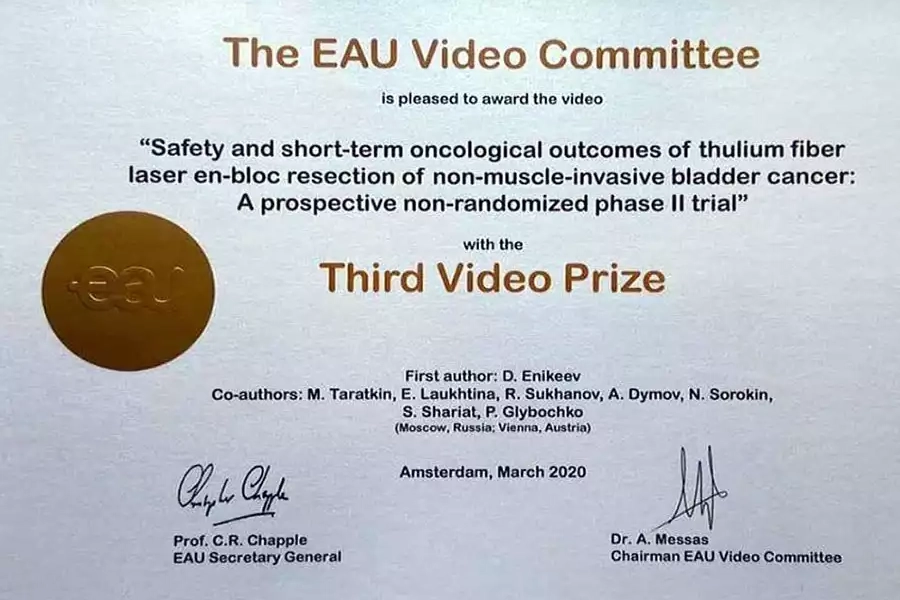
Third Video Prize, European Association of Urology meeting, 2020

Top Viewed Article, 2023
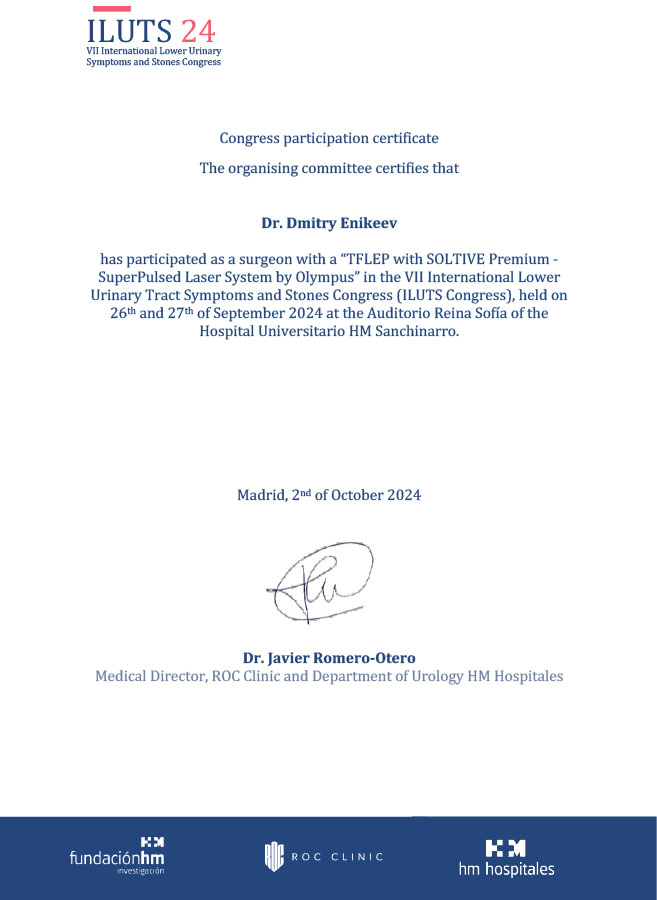
Certificate of Participation in Congress, 2024

Adjunct-professor, Medical University of Vienna, 2025-2028

Membership Loyalty Certificate, 2026
Watch new events on watch new events on twitter
What patients say
Full treatment support
From the first consultation to full recovery. Appointments available in English, Hebrew, and Russian.
We work with all clinics in Israel
Professor Enikeev has the ability to perform surgeries at any medical center in the country. Depending on the clinical situation and the patient’s preferences, we select the most suitable hospital — with the right equipment, conditions, and convenient location.
We take care of the entire treatment process
We’ll handle communication with the clinic and prepare all necessary documents if a procedure or surgery is required. Translation can also be arranged if needed. Everything is organized so that you can focus on your recovery — not the logistics.
Clear and complete cost information in advance
You’ll receive detailed information about the cost of consultations, tests, and procedures. We clarify in advance what is covered by insurance and what may require additional payment. This helps avoid misunderstandings and allows you to plan each stage of treatment with confidence.
Ongoing contact with your doctor after the appointment
We stay in touch with you even after the consultation or procedure. You can always ask follow-up questions, receive recovery recommendations, or adjust your treatment plan. It’s important to us that you feel supported every step of the way.
Surgical Videos
by Professor Dmitry Enikeev


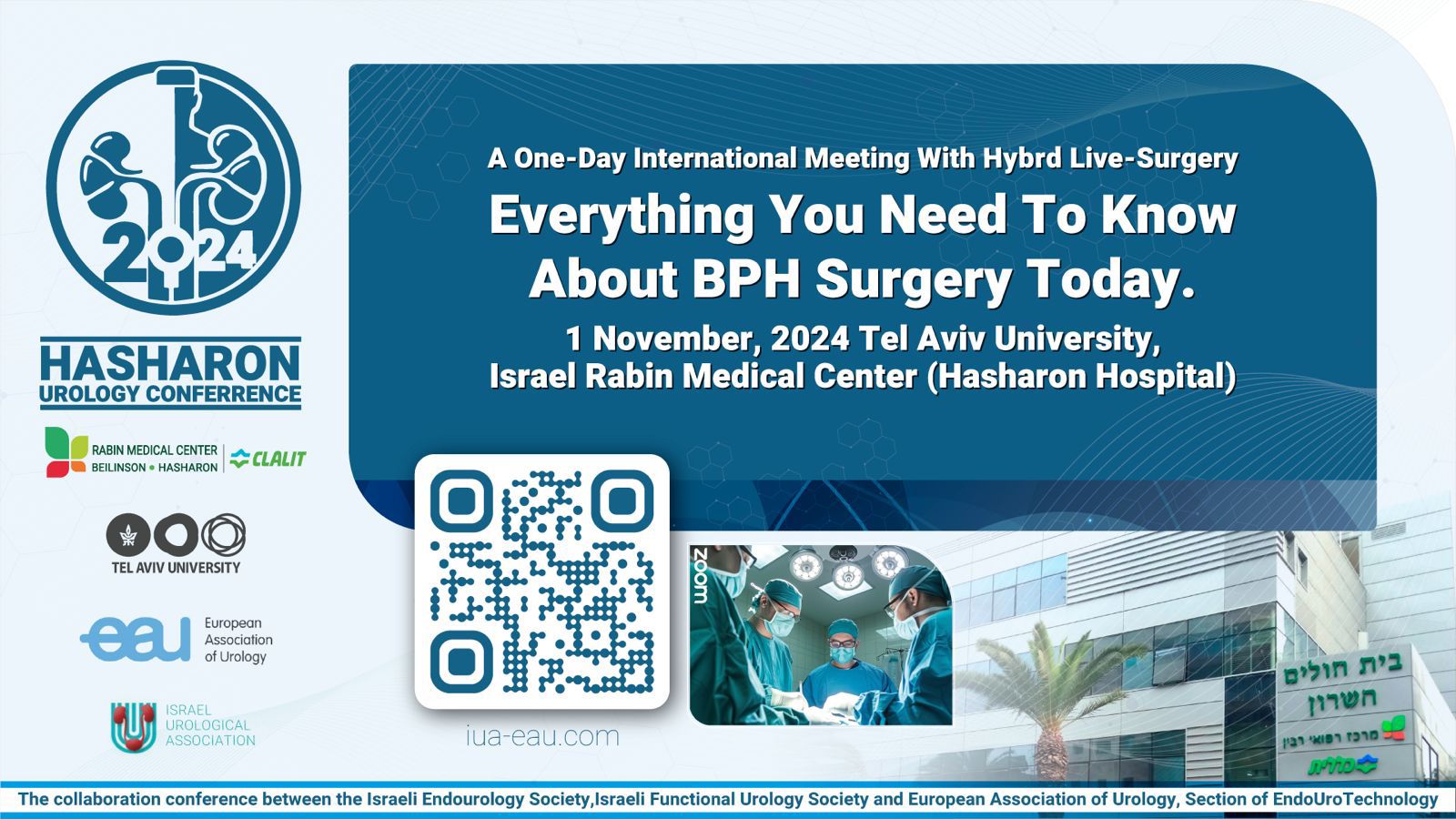


Book an Appointment with Urologist Prof. Dmitry Enikeev
In person consultations in Tel Aviv and Ashkelon, online consultations worldwide.
Appointments are available:
- privately
- through Ayalon insurance
- through Clalit Mushlam
The doctor’s assistant will help you choose a convenient appointment time and answer your questions.
Weekdays from 9:00 AM to 6:00 PM
In person consultation
- Tel Aviv
Raphael Hospital, Atidim Park, Building 3, 1st floor.
Please confirm the office number with the secretary.
Parking is available in Building 6.
Public transportation: bus terminal at the entrance to Atidim Park, routes 6, 7, 8, 12, 22, 42, 52, 54, 75, 76, 189, 220, 259, 266.
- Ashkelon
TB Clinic, Arie Tagar 41, 2nd floor.
Please confirm the office number with the clinic secretary.
Municipal parking available. - Online consultation
Conducted via Zoom.